

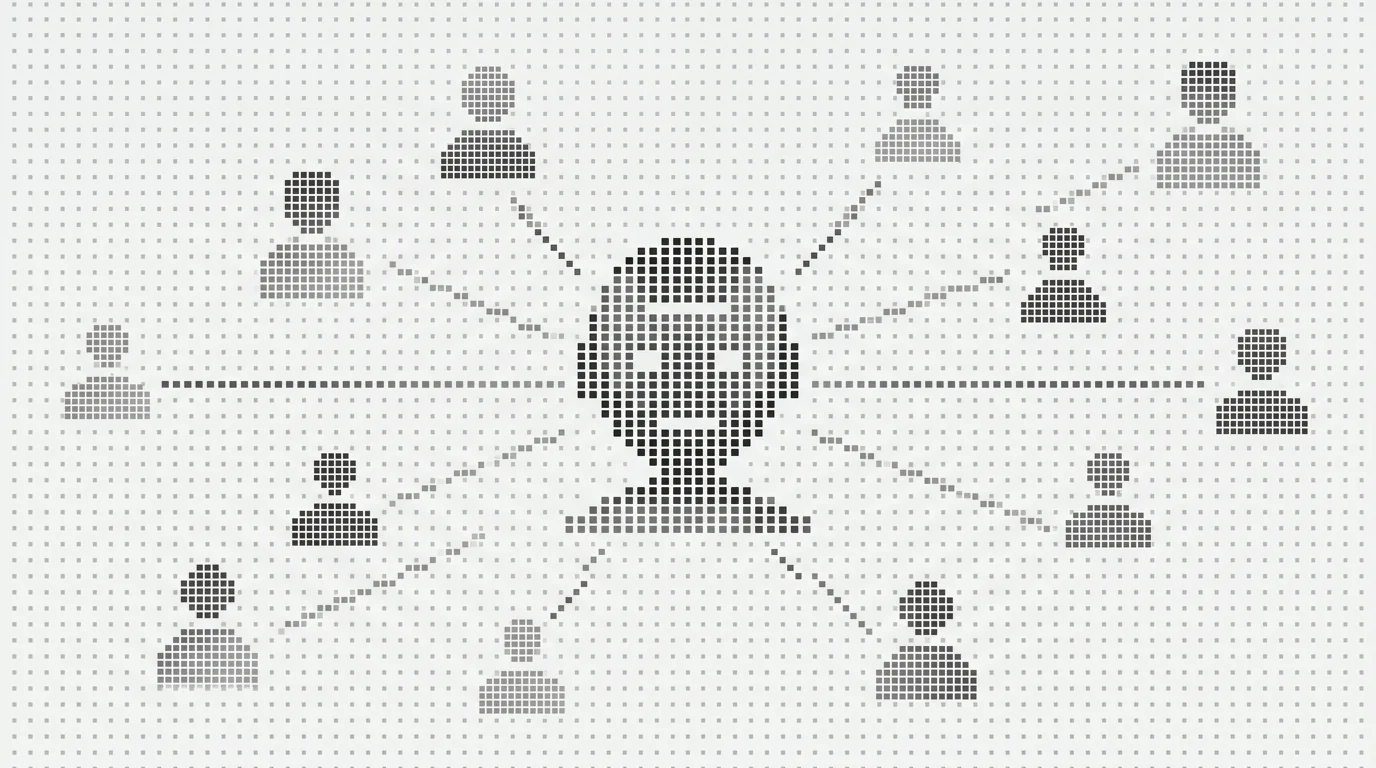
AI sales agents are everywhere. 11x just raised $74M. Artisan is automating entire SDR teams. AiSDR, Regie.ai, Salesforce Einstein SDR - the market is exploding with tools that promise to replace your outbound reps with autonomous agents that prospect, personalize, and book meetings while your team sleeps.
But here’s what nobody is talking about: these agents are only as good as the data they run on. And right now, most of them are running blind.
They’ve got contact databases. They’ve got firmographics. They’ve even got “intent signals.” But they’re missing the single most valuable data source your business already has - the people visiting your website right now.
This post breaks down the data architecture behind AI sales agents, identifies the critical gap that’s throttling their performance, and shows you how to fix it.
Table of Contents
- The AI Agent Revolution
- What Data AI Agents Actually Consume
- The Missing Layer: Real-Time Visitor Identity
- Why 90% of Visitor Data Goes Unused
- The Architecture That Changes Everything
- The Accuracy Problem No One Talks About
- What Changes When AI Agents Have Visitor Identity
- Implementation: Three Paths
- The Future: Identity as Infrastructure
- FAQ
The AI Agent Revolution
Let’s set the stage. Here are the major AI SDR platforms and what they bring to the table:
| Platform | Funding / Scale | Contact Database | Price Range | Focus |
|---|---|---|---|---|
| 11x (Alice) | $74M raised | 400M+ contacts | $5-10K/mo | Full-cycle outbound automation |
| Artisan (Ava) | Series A | 300M+ contacts | Custom pricing | End-to-end SDR replacement |
| AiSDR | Growing fast | 700M+ contacts | ~$900/mo | Multi-channel outbound |
| Salesforce Einstein SDR | CRM-native | Salesforce data | Enterprise pricing | Inbound lead qualification |
| Qualified (Piper) | $200M+ raised | CRM + enrichment | $40-68K/yr | Inbound AI SDR + chat |
| Regie.ai | $40M+ raised | Integrated data | Custom pricing | Content + outreach automation |
The common thread? They all need data to personalize, prioritize, and time their outreach. Without good input data, even the best AI model writes generic emails that land in spam.
Think of it this way: an AI agent with bad data is like giving a brilliant salesperson a phone book and asking them to close deals. They’ve got the skills but none of the context that matters.
What Data AI Agents Actually Consume
Every AI SDR platform pulls from multiple data layers to build its picture of a prospect. Here’s what that stack looks like:
| Data Layer | What It Provides | Typical Source | Limitation |
|---|---|---|---|
| Contact database | Name, email, phone, title | Apollo, ZoomInfo, Lusha | Static; decays ~30% per year |
| Firmographic | Company size, revenue, industry | Clearbit, Crunchbase | No individual-level intent |
| Technographic | Tools and software used | BuiltWith, Datanyze | Lagging indicator |
| Intent signals | Topic research activity | Bombora, G2, 6sense | Company-level only |
| CRM history | Past interactions, deals, notes | Salesforce, HubSpot | Limited to known contacts |
| Visitor identity | WHO visited YOUR site, WHAT they viewed, WHEN | Leadpipe | The missing layer |
The first five layers are table stakes. Every serious AI SDR uses some combination of them. But that last layer - real-time visitor identity - is where the gap is. And it’s a massive one.
The core problem: AI agents know about millions of people who might be interested. They don’t know about the specific people who are interested - the ones on your website right now.
The Missing Layer: Real-Time Visitor Identity
Your website is the highest-intent channel you own. Full stop.
Someone browsing your pricing page at 2 PM on a Tuesday is more valuable than 1,000 cold contacts from any database. They’ve found you. They’re evaluating you. They might be comparing you to competitors at this very moment.
But 97% of visitors leave without filling out a form. Your AI agent never knows they were there. It keeps blasting cold emails to people who may never have heard of you while warm prospects - people literally reading your case studies - slip through unnoticed.
Here’s what that looks like in practice:
┌─────────────────────────────────────────────────────────┐
│         YOUR WEBSITE: 10,000 MONTHLY VISITORS           │
├─────────────────────────────────────────────────────────┤
│                                                         │
│   ┌── 200 fill out forms (2%)                          │
│   │   └── Your AI agent knows about these ✓            │
│   │                                                     │
│   ├── 3,800 identifiable with visitor ID (38%)         │
│   │   └── Your AI agent has NO IDEA ✗                  │
│   │                                                     │
│   └── 6,000 truly anonymous (60%)                      │
│       └── Not identifiable by any tool                 │
│                                                         │
│   RESULT: Your AI agent is blind to 3,800 warm leads   │
│   every single month.                                   │
└─────────────────────────────────────────────────────────┘
Those 3,800 identified visitors aren’t cold prospects. They’re people who already know your brand, visited your site, and showed buying intent through their behavior. And your AI agent - the one you’re paying thousands per month for - never sees them.
That’s not a minor optimization opportunity. It’s a fundamental gap in the data architecture.
Why 90% of Visitor Data Goes Unused
If visitor identification technology exists (and it does - there are dozens of tools on the market), why isn’t every AI agent already using it?
Five reasons:
1. Dashboard-Only Products
Most visitor ID tools give you a dashboard. You log in, see a list of visitors, maybe export a CSV. That’s fine for a human rep checking leads each morning. It’s useless for an AI agent that needs real-time, programmatic data.
No API = no automation.
2. No Webhook Support
Even tools with APIs often lack webhook delivery. Your AI agent can’t poll an endpoint every 30 seconds waiting for new visitors. It needs data pushed to it the moment a visitor is identified - in real time, with full context.
3. Company-Level Only
Tools like Leadfeeder and 6sense identify the company visiting your site. That’s helpful for account-based marketing, but your AI agent can’t send an email to “Acme Corp.” It needs a person - a name, an email, a title.
Company-level identification is like knowing someone from Google is on your site. Cool. Which of their 180,000 employees? That’s the question that matters.
4. Probabilistic Matching Returns Wrong People
This is the ugly one. Some visitor ID tools use probabilistic matching - they make educated guesses about who’s visiting based on IP ranges, browser fingerprints, and statistical models. Sometimes they’re right. Often they’re not.
When a probabilistic tool tells your AI agent that “John Smith, VP of Sales” visited your pricing page - but it was actually someone else entirely - your agent sends a perfectly personalized email to the wrong person. John has never heard of you. He immediately knows it’s automated. Burned lead.
5. No Integration Path to AI Frameworks
Most visitor ID tools were built for the pre-AI era. They integrate with CRMs and email platforms, sure. But they don’t speak the language of AI agent frameworks. No structured data output. No event-driven architecture. No way to feed context into an agent’s decision-making loop.
The Architecture That Changes Everything
Here’s what the right setup looks like:
┌──────────────┐     ┌──────────────┐     ┌──────────────┐
│  Your Site   │────▶│   Leadpipe   │────▶│  AI Agent    │
│  (pixel)     │     │  (identify)  │     │  (act)       │
└──────────────┘     └──────────────┘     └──────────────┘
       │                     │                     │
  Visitor lands       Real-time webhook      Personalized
  on pricing page     with name, email,      outreach within
                      company, pages viewed  minutes of visit
The flow in detail:
- Pixel fires - A visitor lands on your site. Leadpipe’s JavaScript pixel captures the visit.
- Identity resolved - Leadpipe’s identity graph matches the visitor to a real person using deterministic matching. Name, business email, phone, company, title.
- Webhook delivers - Within seconds, a webhook fires to your AI agent (or to Clay, Zapier, or your custom integration) with the full visitor profile.
- Context packaged - The agent receives not just who the person is, but what they did: pages viewed, time on site, return visit history, referral source.
- Agent acts - Armed with real context, the AI crafts outreach that references actual behavior: “I saw you were comparing our enterprise plan - happy to walk through what’s different about it.”
- Outreach lands - The prospect gets a relevant, timely message within minutes of their visit. Not days. Minutes.
This is the difference between “Hi, would you like to learn about our product?” and “Hey, I noticed you were digging into our API docs - are you building an integration?”
The first gets deleted. The second gets a reply.
Try Leadpipe free with 500 leads →
The Accuracy Problem No One Talks About
Here’s where it gets critical. Feeding bad data into an AI agent isn’t just unhelpful - it’s actively destructive.
Why Wrong Data Is Worse Than No Data
When an AI agent has no data, it sends a generic cold email. The prospect ignores it. No harm done.
When an AI agent has wrong data, it sends a hyper-personalized email to the wrong person. The prospect immediately recognizes it as automated. Your brand takes a hit. That person tells colleagues. You’ve burned a lead you never actually had.
The formula is simple:
Wrong visitor ID + AI personalization = embarrassing outreach at scaleThe Independent Accuracy Test
An independent test evaluated major visitor identification tools by having a Gartner auditor visit websites and comparing each tool’s identification against the known visitor.
The results:
| Tool | Accuracy Score (out of 10) | Matching Method |
|---|---|---|
| Leadpipe | 8.7 | Deterministic |
| Opensend | 7.5 | Deterministic |
| RB2B | 5.2 | Probabilistic |
| Warmly | 4.0 | Probabilistic |
Deterministic matching means significantly fewer false positives. Leadpipe matches visitors against known identity records - verified email addresses, authenticated sessions, first-party data signals. It doesn’t guess.
Probabilistic tools, by contrast, are essentially making statistical bets. Sometimes the odds are good. Sometimes they’re not. And when they’re feeding data to an AI agent that will act on every single data point, “sometimes” isn’t good enough.
Read the full breakdown: Visitor Identification Accuracy: Independent Test Results
What This Means for AI Agents
If you’re feeding visitor identity data into an AI agent, accuracy isn’t a nice-to-have. It’s the whole ballgame.
| Scenario | Outcome |
|---|---|
| Accurate ID + AI personalization | Relevant outreach, high reply rates |
| No ID + AI cold outreach | Generic email, low reply rates |
| Wrong ID + AI personalization | Embarrassing email, burned lead, brand damage |
Your AI agent will send outreach to every identified visitor with full confidence. If 40% of those identifications are wrong (as with some probabilistic tools), you’re automating embarrassment at scale.
What Changes When AI Agents Have Visitor Identity
When you connect accurate, real-time visitor identity data to your AI agent, five things shift dramatically:
1. Timing
Before: Outreach happens whenever the AI gets around to your prospect in the queue - could be days or weeks after they showed interest.
After: Outreach fires within minutes of a visit. The prospect is still thinking about your product when the email lands.
Respond within 5 minutes and you’re 21x more likely to qualify the lead (InsideSales.com data). Most AI agents without visitor data don’t even know the clock started.
2. Context
Before: “Hi Sarah, I noticed your company is growing fast and thought our platform might help…”
After: “Hi Sarah, I saw you were looking at our pricing for the growth plan - want me to walk you through what’s included for teams your size?”
One of these is a cold pitch. The other is a conversation starter. AI agents with page-level visitor data can reference specific behavior, making outreach feel helpful instead of invasive.
3. Prioritization
Not all visitors are equal. Your AI agent should treat them differently:
| Visitor Behavior | Priority | Suggested Action |
|---|---|---|
| Pricing page, 3+ minutes | Critical | Immediate outreach |
| Case study + product page | High | Same-day outreach |
| Blog post, single visit | Medium | Add to nurture sequence |
| Homepage bounce, < 10 sec | Low | Skip outreach |
Without visitor identity data, your AI agent treats every contact in its database the same. With it, the agent can prioritize based on actual buying signals from your own website.
4. Personalization
This goes beyond “I saw you visited our site.” With full visitor context, your AI agent knows:
- Their role and company - tailor the value prop
- Which pages they viewed - reference specific features they researched
- How long they spent - gauge depth of interest
- Whether they’re a return visitor - reference their research journey
- Their referral source - know if they came from a competitor comparison, a G2 listing, or an ad
That’s the difference between a template and a conversation.
5. Conversion
The numbers tell the story:
| Outreach Type | Typical Response Rate |
|---|---|
| Cold outbound (no intent signal) | 1-3% |
| Intent-based outbound (Bombora, G2) | 5-8% |
| Visitor-identified warm outreach | 15-25% |
The jump isn’t incremental. It’s categorical. You’re reaching people who already know your brand, at the exact moment they’re evaluating you, with context about what they care about. That’s what midbound - the strategy between inbound and outbound - looks like in practice.
Implementation: Three Paths
Depending on your setup, there are three ways to wire visitor identity into your AI agent stack.
Path 1: For AI SDR Platform Builders
If you’re building an AI SDR product and want to embed visitor identification as a core capability:
- Use Leadpipe’s API to mint pixels programmatically for each client
- Receive webhooks with visitor identity data in real time
- Feed visitor context directly into your agent’s decision-making loop
- White-label the entire experience under your brand
This is how platforms are embedding identity into their products today. You don’t need to build an identity graph from scratch - you can plug into one that already identifies 30-40%+ of website visitors with deterministic accuracy.
Path 2: For Teams Using AI SDRs
If you’re already using an AI SDR tool (11x, Artisan, AiSDR, etc.) and want to feed it better data:
The stack: Leadpipe → Clay → Your AI SDR
- Leadpipe identifies visitors and fires webhooks
- Clay receives the webhook, enriches the data further (additional firmographics, technographics, social profiles)
- Enriched lead gets pushed to your AI SDR with full context
- AI SDR crafts personalized outreach based on visitor behavior + enriched profile
This is the path most teams can implement in an afternoon. No engineering required.
Path 3: The Complete Stack (Visitor to Booked Meeting)
For teams that want the full architecture - from anonymous visitor to booked meeting - with no manual steps:
┌──────────┐   ┌──────────┐   ┌──────────┐   ┌──────────┐
│ Leadpipe │──▶│   Clay   │──▶│  AI SDR  │──▶│ Calendar │
│  Pixel   │   │ Enrich   │   │ Outreach │   │ Booked   │
└──────────┘   └──────────┘   └──────────┘   └──────────┘
     │              │              │              │
  Identify     Add company     Personalize    Meeting
  visitor      data, social    email based    booked with
  in real      profiles,       on pages       zero human
  time         tech stack      visited        intervention
This is the stack we detail in AI SDR Data Stack: Anonymous Visitor to Booked Meeting. It’s the most powerful configuration, and teams running it report 3-5x more booked meetings versus AI SDRs running on static contact databases alone.
The Future: Identity as Infrastructure
Here’s where this is heading.
The next wave isn’t “visitor identification tools.” It’s identity as infrastructure - embedded into every AI agent, every sales platform, every enrichment workflow. Just as Stripe became invisible payments infrastructure and Twilio became invisible communications infrastructure, real-time identity resolution is becoming the invisible data layer beneath modern sales tech.
The tools that win the AI SDR race won’t be the ones with the cleverest prompts or the flashiest UI. They’ll be the ones with the best data underneath. Specifically:
- Real-time - not batch imports, not nightly syncs. Data that arrives within seconds of a visitor hitting your site.
- Person-level - not company-level. You can’t email a company. You need a person.
- Deterministic - not probabilistic guesses. Every wrong identification compounds into brand damage at AI-automated scale.
- API-first - not dashboard-first. The data needs to flow into agent frameworks, enrichment tools, and orchestration layers without human intervention.
This is why we built Leadpipe’s API and webhook infrastructure the way we did. The dashboard is there for teams that want it. But the real value is in the data pipeline - the ability to turn anonymous website traffic into actionable identity data that feeds directly into whatever system needs it. For a deeper look at why identity APIs are becoming essential infrastructure for every AI agent, see Why Every AI Agent Needs an Identity API.
The cost of ignoring anonymous traffic isn’t just missed leads anymore. It’s the difference between your AI agent operating at 10% of its potential and operating at 100%.
Try Leadpipe free - 500 identified leads, no credit card required →
FAQ
Can AI sales agents use visitor identification data directly?
Yes, if the visitor ID tool supports webhooks or API access. Most AI SDR platforms can ingest data from external sources - the key is getting the data to them in real time and in a structured format. Leadpipe’s webhooks deliver visitor identity data (name, email, company, pages viewed, timestamps) as structured JSON that any AI agent framework can consume. For platforms without native integration, tools like Clay or Zapier can bridge the gap.
How is visitor identification different from intent data providers like Bombora or 6sense?
Intent data providers tell you which companies are researching topics related to your product - across the web, not on your site specifically. Visitor identification tells you which people are on your website, what they’re looking at, and how engaged they are. They’re complementary: intent data helps with account targeting, visitor identity helps with person-level intent signals and precise timing. The most effective AI agent stacks use both.
What if a visitor is identified incorrectly - won’t the AI agent make things worse?
Absolutely, and this is the biggest risk of feeding probabilistic visitor data into AI agents. If the identification is wrong, the AI will personalize outreach for the wrong person - and the recipient will immediately know the message is automated and irrelevant. This is why deterministic matching matters far more in an AI-automated context than it did when humans were reviewing leads manually. A human might catch a bad match. An AI won’t.
What does implementation actually look like? Is it hard?
For most teams, the basic setup takes under an hour. Install Leadpipe’s pixel on your site (2-5 minutes), configure a webhook to your preferred destination (Clay, Zapier, or direct to your AI SDR tool), and set up the outreach logic. The Leadpipe + Clay + HubSpot integration guide walks through a popular configuration step by step. For platform builders who want API-level access, check the developer guide.
Related Articles
- How to Choose a Data Provider for Your AI SDR
- How to Feed Visitor Data Into Your AI Agent
- AI SDR Data Stack: Anonymous Visitor to Booked Meeting
- Visitor Identification API: Complete Developer Guide
- Visitor Identification Accuracy: Independent Test Results
- Person-Level Intent Data: How It Works
- How to Identify Anonymous Website Visitors