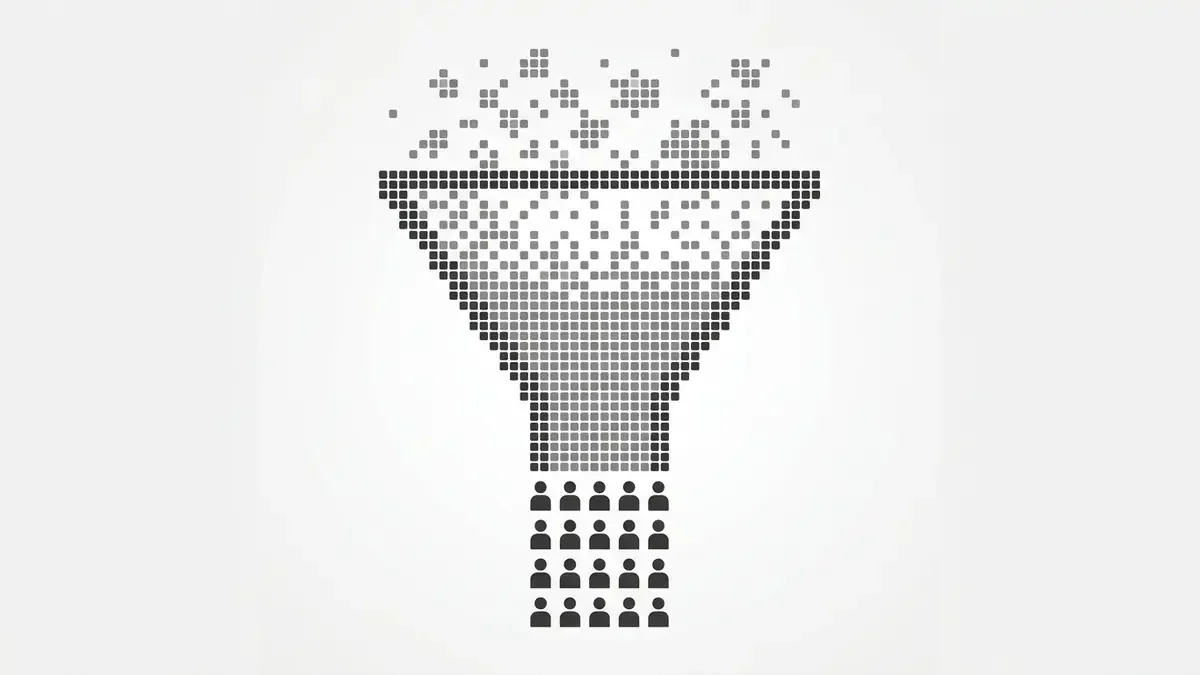


Buyer intent - also called buying intent or buyers intent - is observable evidence that a person or company is actively considering a purchase, inferred from behaviors like pricing page visits, competitor comparisons, category research, and repeat visits. Firmographics tell you who could buy. Buyer intent tells you who is buying now.
“Buyer intent” and “buying intent” mean the same thing; one describes the buyer, the other the activity. This guide covers the definition, the main buying intent signals, the types of intent data, how to measure intent signals, and the difference between account-level and contact-level (person-level) intent.
In one sentence: Buyer intent is the timing signal in B2B sales - evidence that someone is in-market right now, which tells you who to contact today instead of who fits your ICP someday.
What Is Buyer Intent? (Definition and Meaning)
Buyer intent is the demonstrated likelihood that a person or company is actively considering a purchase, measured through observable digital behaviors like content consumption, search activity, website visits, and engagement patterns. Unlike demographic or firmographic data, buyer intent is about timing. It separates an account worth calling today from one that should stay in nurture.
Buyer intent data is the raw behavioral data used to infer that intent: page views, topic consumption, searches, review-site activity. Intent data is the input; buyer intent is the conclusion. See intent data for the data side in more depth.
Why Buying Intent Matters in B2B
B2B buyers do most of their work before they ever talk to you:
- In 6sense’s 2024 Buyer Experience Report, B2B buyers were nearly 70% through their purchasing process before engaging sellers, buyers initiated first contact more than 80% of the time, and 81% already had a preferred vendor at the time of first contact.
- The same report put the average B2B buying cycle at 11.3 months and the average buying group at 11 people.
- Gartner’s research on the B2B buying journey finds buyers spend only 17% of their buying time meeting with potential suppliers.
- A Gartner sales survey published in June 2025 found 61% of B2B buyers prefer a rep-free buying experience.
Put those together and the logic is clear. If you wait for a form fill, you usually arrive after the shortlist is set. Buying intent signals are how you see the evaluation while it is still happening, so you can show up with something relevant before a preferred vendor is locked in.
Buying Intent Signals: The Complete Table
Buyer intent signals are the individual behaviors that suggest someone is in-market. They differ by where they are observed (your properties vs the wider web) and by what they resolve to (an account or a named person).
| Buying intent signal | Source | Resolves to | Strength |
|---|---|---|---|
| Repeat pricing page visits | First-party (your site) | Account or person, with visitor ID | Very high |
| Demo, trial, or “contact sales” page visit | First-party | Account or person | Very high |
| Comparison or “alternatives” page visit on your site | First-party | Account or person | High |
| Integrations, security, or implementation docs | First-party | Account or person | High |
| Case studies from their industry | First-party | Account or person | Medium-high |
| Multiple people from one company visiting | First-party | Account | High (buying group forming) |
| Email clicks to product pages | First-party | Person | Medium |
| Competitor or category research across the web | Third-party / cross-site | Account (most vendors) or person (some) | Medium-high |
| Review-site category and comparison views | Second- or third-party | Account (typically) | High |
| Topic surge vs baseline on B2B publishers | Third-party co-op | Account | Medium |
| Job postings for relevant roles | Public data | Account | Medium |
| Funding, leadership change, tech install or removal | Public / technographic | Account | Low-medium (trigger, not intent) |
| General blog reading, social follows | First- or third-party | Person or account | Low |
High-intent signals indicate someone past awareness and comparing options. Medium-intent signals suggest research-phase activity. Low-intent signals show awareness but not active buying. The strongest programs combine first-party signals (what happens on your site) with third-party signals (what happens elsewhere).
Intent Data Types
“Intent data types” usually means one of three ways of slicing the market.
By source: first-party, second-party, third-party
| Intent data type | What it captures | Examples |
|---|---|---|
| First-party intent | Behavior on your website, product, and emails | Pricing page visits, identified visitors, trial activity |
| Second-party intent | Another platform’s first-party data shared with you | Review-site buyer intent, partner webinar data |
| Third-party intent | Research across sites you don’t own | Publisher co-op topic surges, cross-site pixel networks |
By granularity: account-level vs contact-level
This is the distinction most buyers of intent data care about. It is covered in detail below.
By design: predefined topics vs custom intent data
Most providers let you choose from a fixed taxonomy of topics. Custom intent data means defining your own signals: your competitors’ brand names, your specific category keywords, or a custom combination of topics and page types. Leadpipe’s Orbit tracks 20,810 intent topics, and teams can build intent audiences around the specific topics that match their category. For a look at which topics tend to matter, see intent topics that predict revenue.
What Is Account-Level Intent Data?
Account-level intent data tells you that a company is researching a topic, without telling you who at that company is doing it. Signals from many people and devices are rolled up to an organization, usually by matching IP addresses or domains to companies.
The classic example is Bombora’s Company Surge. Bombora describes monitoring 21,600+ topics and using “relative, account-specific scoring that compares the most recent three weeks of activity against a 12-week historical baseline.” That surge approach is valuable for ABM prioritization: it tells you which accounts deserve attention this month.
The limitation is the last mile. “Acme Corp is surging on data enrichment” still leaves an SDR to guess which of Acme’s employees to contact.
What Is Contact-Level (Person-Level) Intent Data?
Contact-level intent data - also called person-level intent - attaches the research signal to a specific named individual with a role and contact details. Instead of “Acme is researching visitor identification,” you get “the VP of Marketing at Acme read three comparison articles and visited two vendor pricing pages this week.”
| Account-level intent | Contact-level / person-level intent | |
|---|---|---|
| Answers | Which companies are in-market? | Which people are in-market? |
| Typical resolution | IP or domain to company | Identity match to a person |
| Best for | ABM prioritization, account ad targeting | SDR outreach, personalized sequences, people-based ad audiences |
| Gap | Who to contact is still a guess | Coverage depends on the identity graph behind it |
| Action speed | Needs research before outreach | Ready to route to a rep |
Which buyer intent tools work best for contact-level rather than account-level signals?
The honest answer: check how each vendor resolves a signal to a person, and ask for a sample. Several providers now offer contact-level options alongside account-level data. For example, ZoomInfo’s intent data page says it now shows “the specific people inside those accounts - their role, seniority, and place in the buying decision,” in addition to the account-level view it has long offered. Bombora’s page also references buying-group and persona-level insight on top of its account-level surge.
The questions worth asking any vendor, including us:
- How is the person matched? Deterministic identity match, or inferred from role and location?
- Where do the signals come from? Licensed publisher co-op, the vendor’s own network, or your own site?
- How fresh is it? Weekly batches or daily refresh?
- Can you export named people to your CRM and ad platforms, or only view them in the vendor’s UI?
For a deeper comparison, see intent data providers compared and proprietary vs licensed intent data.
Is there an intent data model designed specifically for identifying individual contacts?
Yes. Leadpipe Orbit was built person-first. Instead of licensing a publisher co-op and rolling signals up to accounts, Orbit runs its own cross-site pixel network across 5M+ websites, resolves activity to individuals through Leadpipe’s own identity graph, and refreshes intent scores every 24 hours across 20,810 topics. The output is a list of named people researching your category, which can be pushed to your CRM, outbound sequences, and ad platforms. See person-level intent data: how it works and how early Orbit detects in-market buyers.
Pair it with website visitor identification and you have both halves of contact-level intent: people researching your category across the web, and people researching you on your own site.
Try Leadpipe free with 500 leads →
How to Measure Buyer Intent Signals
Buyer intent signals measurement comes down to turning raw events into a score a rep can act on. Most intent scoring models weigh four dimensions.
| Dimension | Question it answers | How to measure |
|---|---|---|
| Topic relevance | Is this research about what we sell? | Map topics and pages to your category; weight competitor and pricing topics highest |
| Recency | Is it happening now? | Decay points over time, e.g., full weight within 7 days, half by 14, near zero by 30 |
| Frequency | Is it a pattern or a one-off? | Count distinct sessions or research days in a rolling window |
| Depth and breadth | How serious is it? | Pages per visit, high-intent page types, number of people from the same account |
A simple intent scoring model (illustrative)
This is a hypothetical starting point, not a benchmark. Tune the weights against your own closed-won data.
| Signal | Points |
|---|---|
| Pricing page visit (per day, max 3) | +15 |
| Comparison or alternatives page | +10 |
| Case study or integrations page | +5 |
| Third-party research on a competitor topic | +10 |
| Second person from same account active this week | +10 |
| No activity in 14 days | -50% of score |
Route anything above your threshold to sales the same day. Surge detection adds a second lens: compare an account’s or person’s recent activity against their own baseline. A spike matters more than a steady hum - if someone who normally reads one article a month reads twelve about visitor identification in a week, something changed.
Validate the model
Measure intent the way you would any other lead source: compare meeting rate, opportunity rate, and win rate for high-intent vs low-intent cohorts over a quarter. If high-intent leads don’t convert better, your topics or weights are wrong. Our guide on lead scoring with visitor behavior and intent walks through this, and reading the Orbit intent score explains how Orbit’s score is built.
How Teams Act on Buyer Intent
- Sales prioritization: An SDR starts each morning with the people and accounts that showed buying signals in the last 48 hours, instead of working a static list of 500 accounts.
- Triggered outreach: When a contact crosses an intent threshold, a sequence starts that references the topic they were researching, so the message is relevant rather than random.
- Deal acceleration: A rep sees an open opportunity suddenly researching competitor comparisons and schedules a call to address positioning before the deal drifts.
- Paid media: Marketers push person-level intent audiences to LinkedIn, Meta, and Google, so budget goes to people already researching the category.
- Suppression: Exclude current customers and open deals from prospecting; see excluding customers from intent outreach.
Note that fit and intent are separate filters. A perfect-fit account with no intent should stay in nurture; a high-intent person outside your ICP probably isn’t worth a rep’s time. See fit is not intent.
Related Concepts
| Concept | Description | Learn More |
|---|---|---|
| Intent Data | The raw behavioral data that buyer intent is derived from | What Is Intent Data? |
| Visitor Identification | Matching anonymous visitors to real people for person-level intent | What Is Visitor Identification? |
| ICP | The target profile that intent data should be filtered against | What Is ICP? |
| ABM | The strategy that uses intent to prioritize target accounts | What Is ABM? |
| Lead Scoring | How intent signals turn into a prioritized list | What Is Lead Scoring? |
FAQ
What is buyer intent?
Buyer intent is the measurable likelihood that a person or company is actively considering a purchase, inferred from digital behaviors like pricing page visits, competitor comparisons, demo requests, and category research across the web. It’s the timing signal that separates an account worth calling today from one that should stay in nurture.
What is buying intent?
Buying intent means the same thing as buyer intent: evidence that someone is in an active buying process right now. The term describes the activity (buying) rather than the person (buyer), but in B2B marketing and sales the two are used interchangeably.
What are buying intent signals?
Buying intent signals are specific behaviors that suggest purchase readiness. The strongest are repeat pricing page visits, demo or trial page visits, comparison and alternatives research, integration or security documentation views, and multiple people from the same company researching at once. Weaker signals include general blog reading and social follows.
What is buyer intent data?
Buyer intent data is the collection of behavioral signals - website visits, topic consumption, searches, review-site activity - used to infer who is in-market. It comes from first-party sources (your own site), second-party sources (partners and review sites), and third-party sources (cross-web research).
What are the types of intent data?
Intent data is usually split by source (first-party, second-party, third-party), by granularity (account-level or contact-level), and by design (predefined topic taxonomies or custom intent data built around your own competitors and keywords).
What is account-level intent data?
Account-level intent data shows which companies are researching a topic, rolled up from many people and devices, typically through IP-to-company matching. It’s useful for ABM prioritization, but it doesn’t tell you which person at the company to contact.
What is contact-level intent data?
Contact-level intent data (person-level intent) ties research activity to a specific named individual with a role and contact details, so sales can reach out to the person who is actually researching rather than guessing within an account.
Who offers behavioral intent data with contact-level granularity?
Several vendors now offer contact-level options, and they differ in how they match people and where signals come from. Leadpipe Orbit is built person-first on its own 5M+ site pixel network with daily refresh. ZoomInfo also markets person-level intent on its intent data page. Ask every vendor how a signal is matched to a person and request a sample export.
How do you measure buyer intent signals?
Score signals on topic relevance, recency, frequency, and depth, apply time decay, and compare activity against a baseline to detect surges. Then validate: high-intent cohorts should book meetings and create opportunities at a clearly higher rate than low-intent cohorts.
Why does buyer intent matter for B2B?
Because buyers do most of their evaluation before contacting sales. 6sense’s 2024 research found buyers are nearly 70% through the process before engaging sellers and 81% already have a preferred vendor at first contact. Intent signals let you engage while the decision can still be shaped.
See the people researching you right now: try Leadpipe free with 500 identified leads, no credit card required →
Related Articles
- In-Market Buyer Intent: How to Find Ready-to-Buy Accounts
- Intent Data vs Visitor Identification: What’s the Difference?
- Person-Level Intent Data: How It Works
- Orbit: Person-Level Intent Audiences
- The SDR Playbook for Working Identified Visitors
- Leadpipe Intent API: 20,000+ Topics
- First-Party vs Third-Party Intent Vendors
- Our Intent Data Only Shows Companies