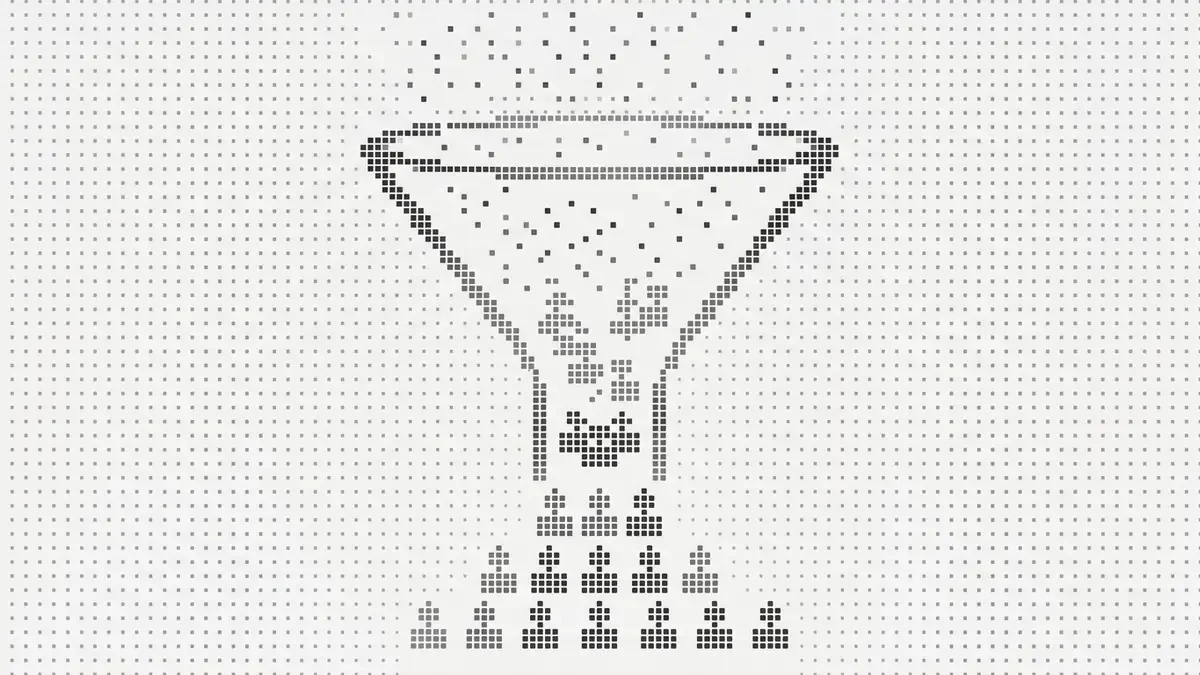


Midbound marketing is middle-of-funnel marketing: engaging buyers who are already researching and comparing, at the decision stage, before they raise their hand.
Inbound marketing waits for a buyer to fill out a form. Outbound marketing reaches out to people who may never have heard of you. Midbound sits in between. It focuses on the people who are actively reading your pricing page, comparing you to alternatives, and researching the problem you solve, but who have not yet booked a demo or replied to anyone.
That middle stretch of the buying journey is where most B2B deals are quietly won or lost. This guide explains what midbound is, why the middle of the funnel matters so much, which signals show a buyer is there, and how to run a midbound motion step by step.
In one sentence: Midbound marketing finds the buyers who are comparing options right now, at the consideration and decision stage, and starts a helpful, relevant conversation before they have already made up their minds.
If you want the channel-level numbers on how midbound compares to cold outreach, read the companion piece, Midbound Is Replacing Cold Outreach - Here’s the Data. This article focuses on the concept and the playbook.
What Is Midbound Marketing?
Most marketing teams think about the funnel in three parts:
| Funnel stage | What the buyer is doing | Typical question in their head |
|---|---|---|
| Top of funnel (awareness) | Noticing a problem, reading broadly | “Is this a problem worth solving?” |
| Middle of funnel (consideration → decision) | Researching solutions, building a shortlist, comparing vendors, checking prices | “Which option is right for us, and what will it cost?” |
| Bottom of funnel (purchase) | Talking to sales, negotiating, signing | “Can we get this approved and implemented?” |
Inbound marketing is strong at the top (content that attracts attention) and at the bottom (catching the people who request a demo). Outbound marketing tries to create conversations at any stage, usually without knowing where the buyer actually is.
Midbound is built for the middle. It uses signals of research and comparison to spot buyers while they are still deciding, then reaches them with context that matches what they are looking at.
The name comes from where it sits: not purely inbound (you do not wait for a form), not purely outbound (you are not guessing), but in the middle, where the buyer’s own behavior tells you they are evaluating.
Inbound vs Outbound vs Midbound
| Inbound | Outbound | Midbound | |
|---|---|---|---|
| Who you reach | People who choose to contact you | People on a list who match your target profile | People who are actively researching or comparing your category |
| Timing | When the buyer is ready to talk (often late) | Whenever your sequence says so | While the buyer is evaluating, before they raise a hand |
| Main signal | A form fill, demo request, or chat | Fit only (title, company, industry) | Fit plus behavior: pricing page visits, comparison pages, return visits, intent topics |
| Typical channels | Content, SEO, forms, chat | Cold email, cold calls, prospecting on LinkedIn | Contextual email, calls, retargeting, sales alerts |
| Cost profile | Low per lead, slow to build | High effort per conversation | Moderate: you pay for visibility, then spend effort only on active buyers |
| Main risk | You meet buyers after they have decided | You interrupt people who are not in market | Follow-up that feels intrusive if it is not handled with care |
The key difference is timing. Inbound often meets buyers late. Outbound often meets them too early. Midbound tries to meet them in the middle, when a helpful conversation can still change the outcome.
Why the Middle of the Funnel Is Where Revenue Is Decided
The strongest argument for midbound comes from how B2B buyers actually buy. Several large studies point to the same pattern: buyers do most of their evaluating on their own, and they settle on a favorite before they ever talk to a vendor.
Buyers do most of the work before they talk to you
- Gartner found that B2B buyers spend only 17% of their buying time meeting with potential suppliers. That 17% is split across every vendor they are considering, so any single vendor gets even less.
- In the 6sense 2024 Buyer Experience Report, buyers were nearly 70% of the way through their purchasing process before engaging with sellers, and 85% had largely established their purchase requirements before reaching out.
- Gartner’s 2025 sales survey reported that 61% of B2B buyers prefer a rep-free buying experience, and a 2026 follow-up put that figure at 67%.
The shortlist is set before the first conversation
- The same 2024 6sense report found that 81% of buyers already had a preferred vendor at the time of first contact.
- The 6sense 2025 Buyer Experience Report found that buyers chose from one of the vendors on their “Day One Shortlist” 95% of the time, and 77% of buyers said their first vendor conversation was with the vendor they ultimately chose. It also found buyers initiated 79% of engagements, with first contact happening around 61% of the way through the journey.
Many people are deciding, and many deals stall
- Forrester’s State of Business Buying 2024 reported that, on average, 13 people are involved in a buying decision, 89% of purchases involve two or more departments, and 86% of B2B purchases stall during the buying process.
Only a small share of your market is buying at any moment
- The LinkedIn B2B Institute’s 95-5 rule, developed with research from the Ehrenberg-Bass Institute, holds that about 95% of your potential buyers are not ready to buy today. Only around 5% are in market at a given time.
What this means
Put those findings together and the logic of midbound is clear:
- At any moment, only a small slice of your market is actively buying.
- That slice does most of its evaluation on its own, in the middle of the funnel.
- By the time buyers contact a vendor, they usually have a favorite, and the favorite usually wins.
So the middle of the funnel is where the shortlist is formed and where most revenue is effectively decided. If your first real touch with a buyer is the demo request, you are often arriving after the decision is mostly made. Midbound is about showing up earlier, during the research, with something useful to say.
For a broader set of numbers, see our roundup of B2B buyer journey statistics and how long B2B buyers research before buying.
The Decision Stage: What Buyers Do and the Signals It Leaves
The decision stage is the part of the middle funnel where a buyer moves from “what are my options?” to “which one should we pick?” Buyers at this stage tend to do a few predictable things:
- Read your pricing page, sometimes several times
- Look at comparison and alternatives pages (“you vs competitor”)
- Read case studies and customer stories from companies like theirs
- Check integration, security, and documentation pages to see if you fit their stack
- Return to your site over several days, sometimes with colleagues from the same company
- Research the problem and competing products across the web, not just on your site
Each of those behaviors is a signal. Midbound turns signals into actions:
| Signal | What it usually means | Recommended action |
|---|---|---|
| Pricing page visit | Evaluating cost and plan fit | Fast, helpful note: offer a plan recommendation or a quick pricing walkthrough. See what to do when someone visits your pricing page |
| Comparison or alternatives page | Actively shortlisting | Share an honest comparison or migration guide; answer the likely objection |
| Case study for their industry | Looking for proof from peers | Send one more relevant story or offer a reference conversation |
| Integration or docs pages | Checking technical fit | Loop in a solutions engineer; share setup steps |
| Return visits over several days | Consideration is active and ongoing | Raise priority; check whether other people from the same company are visiting. See the return visit curve |
| Several people from one company | A buying group is forming | Coordinate account-level outreach; tailor messages by role |
| Off-site research on your category (intent topics) | Researching before they reach your site | Add to retargeting and a light, educational sequence |
| Only a blog post or careers page | Early curiosity, or not a buyer | Do not contact; let nurture and retargeting do the work |
The last row matters as much as the others. Midbound is not “email everyone who visits.” It is choosing the small group whose behavior says they are deciding.
How to Run Midbound Marketing
A midbound motion has five parts: see who is researching, prioritize, reach out with context, stay visible, and hand off cleanly.
1. Identify who is researching
You cannot reach a buyer you cannot see. Most website visitors never fill out a form, so the research that matters most happens anonymously.
- On your website: Person-level website visitor identification turns anonymous sessions into named people and companies. Leadpipe uses deterministic matching against its own proprietary identity graph and identifies roughly 30-40% of US traffic at the person level. For international traffic, IP-to-company identification shows which companies are visiting worldwide. You can test a single IP with the free IP lookup tool.
- Across the web: Buyers research long before they visit you. Orbit provides person-level intent data, showing people who are researching topics related to your category. Learn how person-level intent data works.
Try Leadpipe free with 500 leads →
2. Prioritize by fit and intent
Behavior alone is not enough. A student reading your pricing page is not a buyer. Score every identified person on two axes:
- Fit: Do they match your ideal customer profile? Right industry, company size, role, region?
- Intent: How strong is the behavior? Pricing and comparison pages beat blog posts. Repeat visits beat single visits.
| Low intent | High intent | |
|---|---|---|
| High fit | Nurture and retarget | Reach out today |
| Low fit | Ignore | Light touch or route to self-serve |
For more on why the two must stay separate, read fit is not intent and lead scoring with visitor behavior and intent.
3. Reach out with context, within hours
Decision-stage buyers are comparing options this week, not next quarter. Speed matters, but so does relevance.
- Send real-time alerts to the right rep, for example through Slack alerts.
- Set a response target for your highest-intent segment. Many teams aim for the same business day. See our guide to a follow-up SLA for identified visitors.
- Lead with help related to what they were researching, not with “I saw you on our site.”
- Exclude current customers and open opportunities so you do not spam people already in a conversation. See excluding customers from intent outreach.
4. Stay visible while they decide
Not everyone is ready to reply. Keep useful content in front of them while they finish evaluating:
- Retarget identified visitors with case studies and comparison content.
- Build ad audiences from people researching your category, for example Orbit audiences for LinkedIn ads.
- Add them to a short, educational nurture track rather than a hard sales sequence.
5. Route to sales cleanly
When someone replies or books time, the rep should see the full context: which pages they viewed, how often they returned, who else from their company visited, and what topics they researched. That context shortens discovery and helps the rep speak to what the buyer already cares about.
A simple five-day midbound playbook
| Day | Action | Owner |
|---|---|---|
| Day 0 | High-fit person views pricing or a comparison page. Alert goes to the account owner. | Automated |
| Day 0 (same day) | First touch: short, helpful email tied to the page topic. | SDR or AE |
| Day 1 | Add to a retargeting audience with a relevant case study. | Marketing |
| Day 2 | Connection request or short LinkedIn message referencing a useful resource, not the visit. | SDR |
| Day 3 | If they returned or a colleague visited, a second email with a specific offer (walkthrough, pricing estimate, migration plan). | SDR or AE |
| Day 5 | Brief call attempt or final email; if no response, move to nurture. | SDR |
For a longer version, see the warm outbound sequence for identified visitors and the SDR playbook for identified website visitors.
Example messages
These are examples to adapt, not scripts to paste. Notice that none of them say “I saw you on our pricing page.”
After pricing page research (VP of Marketing, mid-size SaaS):
Subject: Picking a plan for a team your size
Hi Sam, teams around your size usually get stuck choosing between our two middle plans, because the difference is mostly about volume. I put together a one-page guide that shows which plan fits which use case. Want me to send it, or walk through it in 15 minutes?
After comparison page research:
Subject: Honest comparison notes
Hi Priya, if you are weighing a few options in this space, here is a short, honest breakdown of where we are a strong fit and where another approach might suit you better. Happy to answer anything specific.
After several people from one company visit:
Subject: Helping your team evaluate
Hi Jordan, when a few people on a team are evaluating tools like ours, it usually helps to have one shared overview for everyone. I can send a short evaluation checklist your team can use for any vendor, including us.
Metrics to Track
Measure midbound as its own motion so you can see what it contributes.
| Metric | What it tells you |
|---|---|
| Identified decision-stage visitors per week | How much in-market demand you can see |
| Share of identified visitors that match your ICP | Whether your traffic and targeting are healthy |
| Time from signal to first touch | Whether your team is fast enough to matter at the decision stage |
| Reply rate on midbound outreach | Whether your messages feel relevant |
| Meetings booked from midbound | Top-line output of the motion |
| Pipeline created and win rate vs other sources | Whether midbound deals are higher quality |
| Sales cycle length for midbound deals | Whether reaching buyers mid-journey speeds decisions |
Compare midbound against your inbound and outbound numbers using the same definitions. For a full framework, see how to measure visitor identification ROI.
Mistakes to Avoid
Creepy outreach. “I noticed you spent four minutes on our pricing page” makes people uncomfortable. Use the signal to decide what to say, not as the thing you say.
Ignoring fit. High intent from a poor-fit company still wastes sales time. Always combine fit and intent.
Slow follow-up. Decision-stage research is time-sensitive. A signal from last week may already be a decision.
Treating every visit as a lead. A single blog visit is not buying intent. Reserve direct outreach for decision-stage behavior.
Pitching instead of helping. Buyers in the middle of the funnel want clarity. Guides, comparisons, and straight answers work better than a hard demo ask.
No handoff. If sales cannot see what the buyer researched, the context is lost and the first call starts from zero.
Running it forever on the same list. Intent fades. Refresh audiences often and stop contacting people whose signals have gone quiet.
Privacy and Consent
Midbound depends on handling visitor data responsibly. A few principles:
- Know the rules where you sell. Laws such as GDPR in the EU and UK and CCPA/CPRA in California set requirements for how personal data is collected and used. Requirements differ by region, so work with your legal team. Our guides on whether visitor identification is legal, GDPR-compliant visitor identification, and CCPA-compliant visitor identification explain the key considerations.
- Be transparent. Keep your privacy policy and cookie notices up to date and accurate about what you collect.
- Respect opt-outs. Honor unsubscribes and suppression requests across every tool. See suppression lists and consent.
- Use data to be relevant, not to surprise. The goal is a conversation the buyer welcomes.
FAQ
What is midbound marketing?
Midbound marketing is middle-of-funnel marketing. It focuses on buyers who are already researching and comparing solutions, at the consideration and decision stage, but who have not yet contacted you. It uses signals such as pricing page visits, comparison page views, return visits, and intent topics to find those buyers and reach them with relevant, helpful outreach.
What is the difference between midbound and inbound marketing?
Inbound marketing attracts people with content and waits for them to raise their hand by filling out a form or requesting a demo. Midbound acts on research behavior before that happens. Inbound catches buyers who reach out; midbound reaches the much larger group who are evaluating quietly.
What is the difference between midbound and outbound marketing?
Outbound reaches people based on fit alone, usually without knowing whether they are in market. Midbound combines fit with evidence of active research, so you contact people whose behavior shows they are evaluating now.
Is midbound the same as account-based marketing?
No, but they work well together. Account-based marketing starts with a chosen list of target accounts. Midbound starts with behavior: who is researching right now. Many teams use midbound signals to decide which target accounts to prioritize this week. See ABM with visitor identification.
What is middle-of-funnel marketing?
Middle-of-funnel (MOFU) marketing covers the stage between awareness and purchase, when buyers know they have a problem and are comparing ways to solve it. Typical MOFU content includes comparison pages, case studies, pricing guides, and webinars. Midbound is the outreach side of MOFU: identifying the people consuming that content and engaging them.
What is the decision stage of the buyer journey?
The decision stage is when a buyer narrows their options to a shortlist and chooses a vendor. Buyers at this stage look at pricing, compare alternatives, read case studies, and check technical fit. Research from 6sense suggests buyers usually have a preferred vendor before first contact, which is why reaching them during this stage matters.
Why is the middle of the funnel so important for revenue?
Because that is where buyers form their shortlist. Gartner found buyers spend only 17% of their buying time with suppliers, and 6sense found most buyers already have a preferred vendor at first contact. If you only engage buyers after they reach out, the decision is often mostly made.
What tools do I need for midbound marketing?
At minimum: a way to identify website visitors (such as Leadpipe visitor identification), a source of intent data (such as Orbit), a CRM, and a sales engagement or email tool. Alerts in Slack or your CRM help reps act quickly.
Is midbound marketing compliant with privacy laws?
It can be, when it is run responsibly. Follow the privacy laws in the regions where you sell, keep your privacy notices accurate, honor opt-outs, and work with legal counsel on your specific setup.
Start Seeing Your Decision-Stage Buyers
Midbound starts with visibility. Once you can see who is researching and comparing, you can reach them while the decision is still open.
Get 500 free identified leads with Leadpipe, no credit card required →
Related Articles
- Midbound Is Replacing Cold Outreach - Here’s the Data
- B2B Buyer Journey Statistics
- What to Do When Someone Visits Your Pricing Page
- Fit Is Not Intent
- How Person-Level Intent Data Works
- Warm Outbound Sequence for Identified Visitors
- How to Identify Anonymous Website Visitors
- ABM with Visitor Identification